The St Mungo Museum of Religious Life and Art is a museum of religion in Glasgow, Scotland. It has been described as the only public museum in the world devoted solely to this subject, although other notable museums of this kind are the State Museum of the History of Religion in St. Petersburg and the Catharijneconvent in Utrecht. The museum, which opened in 1993, is located in Cathedral Square, on the lands of Glasgow Cathedral off High Street. It was constructed on the site of a medieval castle-complex, the former residence of the bishops of Glasgow, parts of which can be seen inside the Cathedral and at the Peoples Palace Museum, Glasgow Green. The museum building emulates a medieval style to blend in with the nearby Provand's Lordship House.
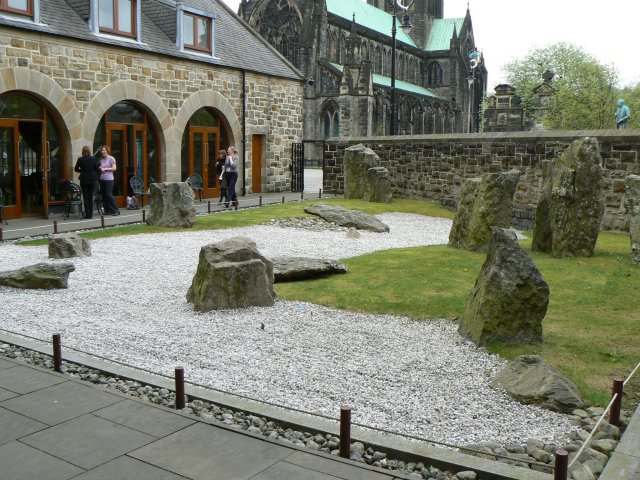
The award-winning St Mungo Museum is a haven of tranquillity in a bustling city. This museum is named after Glasgow's patron saint, who brought the Christian faith to Scotland in the 6th century. The building was built in 1989 in Scottish baronial style by Ian Begg. It was designed to reflect the architecture of the Bishops’ Castle, the site of which is occupied by the museum. Its galleries are full of displays, artefacts and stunning works of art. They explore the importance of religion in peoples’ lives across the world and across time. The venue aims to promote understanding and respect between people of different faiths and of none, and offers something for everyone. You can find out more about some of the world’s major religions, and the story of religion in the west of Scotland. Or you can relax in the museum café, which opens out into the first Zen garden in Britain.
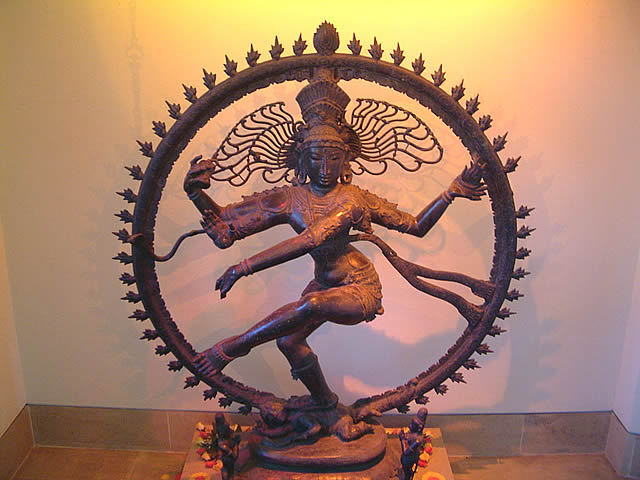
St Mungo Museum of Religious Life and Art includes three galleries of permanent displays. They explore some of the World’s major religions through religious objects and works of art, as well as a gallery dedicated to the role of religion in Glasgow’s history. Some of the highlights of the museum include: Shiva Nataraj (Lord of the Dance). At the far end of the Gallery of Religious Art you will find magnificent bronze sculpture of the Hindu god Shiva Nataraj (Lord of the Dance). Dancing Skeleton. In the Gallery of Religious Life, see the Dancing Skeleton from Mexico which is part the Day of the Dead celebrations. It is a particular favourite with younger visitors! Naga Rassa Mask. This colourful mask of Naga Rassa, represents a snake demon who chases away evil spirits and wards off illness.
There is a range of events on at St Mungo Museum and Provand’s Lordship, from exhibitions to family friendly workshops and self-led trails around the museums.' Heavenly Creatures: Angels in faith, history and popular culture' is on until October 2017 during regular opening hours. Angels are represented all around us. We see them in art, hear about them in stories and songs and watch them in films and on television. Why do angels fascinate us? What makes them so special? What do they actually do? What do they look like? This beautiful exhibition explores these and other questions and features objects from around the world and across the centuries, including paintings, sculpture, stained glass, photographs and multi-media displays.
An introductory leaflet in a number of European and community languages is available from reception. Displays have text in Urdu, Gaelic, Punjabi and Chinese. Some staff at St Mungo Museum have been trained in the use of basic British Sign Language. Please enquire at reception. Guide and assistance dogs are welcome at St Mungo Museum. Large print versions of their Visit Glasgow Museums leaflet are available at reception. Lifts are available to all levels. Pay and display parking and free disabled parking is available in the car park on Castle Street. There are no restrictions on prams and buggies at St Mungo Museum, and the museum is fully accessible to prams and buggies. The accessible toilet is located on the ground floor, on the left of the main entrance from Castle Street. St Mungo Museum is wheelchair accessible. Two wheelchairs are kept in the accessible toilet on the ground floor for visitor use. The accessible toilet is to the left of the main entrance from Castle Street.
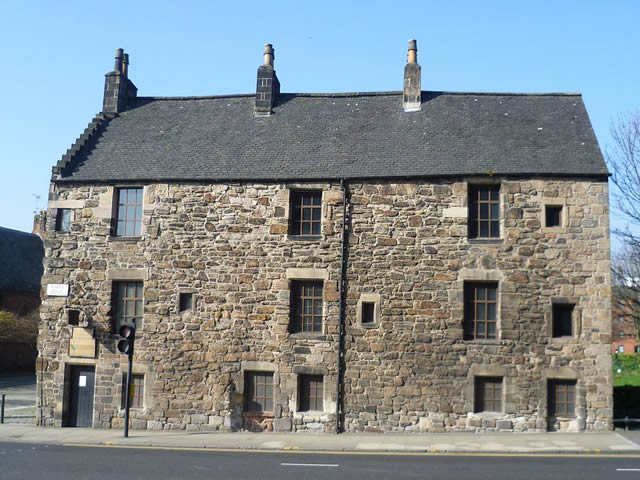
The Provand's Lordship of Glasgow, Scotland, is a medieval-period historic house museum located at the top of Castle Street within sight of the Glasgow Cathedral and Glasgow Royal Infirmary, and next to the St Mungo Museum of Religious Life and Art. Provand's Lordship and the nearby Glasgow Cathedral, are some of the very few surviving buildings from Glasgow's medieval period. Provand's Lordship is the oldest remaining house in Glasgow, the cathedral is the oldest building. Provand's Lordship was built in 1471 as part of St Nicholas's Hospital by Andrew Muirhead, Bishop of Glasgow, the Muirhead coat of arms is still visible on the side of the building. Provand's Lordship was likely to have been used to house clergy and other support staff for the Cathedral, providing temporary housing. The house later became occupied by the Lord of the Prebend of Barlanark and perhaps was shared with the priest of St. Nicholas Hospital and Chapel and became known as Lord of Provan and then Provand’s Lordship. Most of the remaining medieval buildings that surrounded the Cathedral and hospital were demolished between the 18th and 20th centuries. In 1978, the building was offered to the City Of Glasgow by the Provand's Lordship Society. Today the house is furnished with a collection of seventeenth-century Scottish furniture donated by Sir William Burrell.
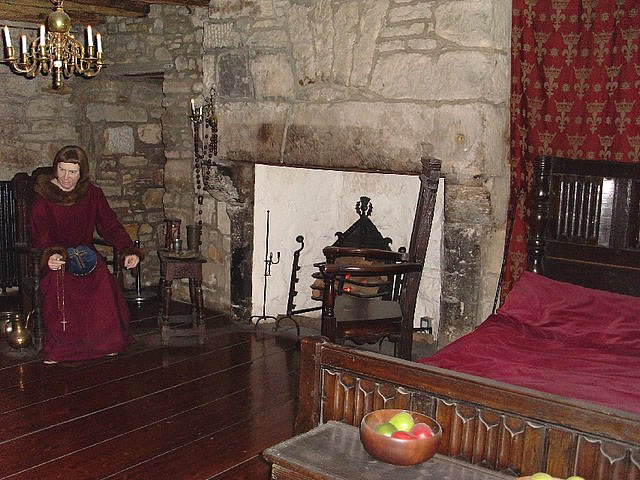
Provand’s Lordship, which was built in 1471 as part of a hospital in the cathedral precinct, is one of only four surviving medieval buildings in Glasgow. Beautifully preserved, the “auld hoose” is furnished with a fine selection of 17th-century Scottish furniture donated by Sir William Burrell, and a series of historic royal portraits. The room settings give a flavour of household interiors around 1500 and 1700, so you can immerse yourself in medieval Glasgow with a visit to this fascinating building.
Once you have toured the house, make sure you find time to visit the St Nicholas Garden situated behind the house, where you can relax and enjoy the tranquil atmosphere. Provand's Lordship and the St Nicholas Garden is only a 15 minute walk from George Square, but once there it feels like you're a world away from the busy city. This garden has been recreated in the style of gardens in the 15th Century, which were traditionally turned to culinary or medicinal use, or sometimes intricate and complex knot box hedging. Cloisters. The Cloisters are a partially enclosed space overlooking the garden, offering the perfect location to reflect on the world. They partly surround and enclose the central parterre and provide an elevated vantage point for visitors. The Cloisters also incorporate a ramped peripheral walkway to view the Tontine Heads. Tontine Heads - surrounding the garden, the cloistered walkway displays an intriguing collection of carved faces. These strange stone masks are known collectively as the Tontine Heads or Tontine Faces. Over the years, these stone masks were scattered then eventually unearthed at various sites around the city. They were finally reunited in 1995 when the St Nicholas Garden opened.
Disabled parking is available in the public car park next to Provand’s Lordship in Castle Street. Guide and assistance dogs are welcome at Provand’s Lordship. Due to the nature of Provand’s Lordship, there are no lifts. Large print versions of their Visit Glasgow Museums leaflet are available from reception at St Mungo Museum of Religious Life and Art which is directly across the road from Provand’s Lordship. There are restrictions on the use of prams and buggies at Provand’s Lordship due to the narrow width of doors and stairs. Please speak to a member of staff. Due to the nature of Provand’s Lordship, the oldest dwelling house in Glasgow, wheelchair access is confined to the ground floor only.
Location : St Mungo Museum, 2 Castle Street, Glasgow G4 0RH
Transport: High Street (National Rail) then 10 minutes. Bus Routes : 19, 19A, 38, 57 and 57A stop close by.
Opening Times St. Mungo's: Tuesday to Sunday, 10:00 to 17:00; Fridays + Sundays opens at 11:00
Opening Times Provand's Lordship: Tuesday to Sunday, 10:00 to 17:00; Fridays + Sundays opens at 11:00
Tickets : Free for both St Mungo's Museum and the Provand's Lordship
Tel. : 0141 276 1625

